
By Meet&Co | 30 July 2024 | 0 Comments
How to Choose the Most Comfortable Desk Chair
Selecting the right desk chair can have a significant impact on your comfort, productivity, and overall well-being. A comfortable chair supports your posture, reduces strain, and enhances your work experience. Here’s a guide to help you choose the most comfortable desk chair for your needs.

Usage Duration: Consider how many hours a day you’ll spend sitting. If you’re in your chair for extended periods, comfort and support become even more critical. For shorter periods, basic comfort features may suffice.
Work Type: Identify the nature of your work. If you engage in tasks that require frequent adjustments or long periods of sitting, look for a chair with comprehensive ergonomic features. Specific tasks might demand additional features like adjustable armrests or enhanced lumbar support.

Adjustability:
A comfortable chair should be highly adjustable. Ensure it offers:
- Seat Height: Allows you to set your feet flat on the ground.
- Backrest Angle: Lets you recline comfortably.
- Armrests: Adjust to reduce strain on your shoulders and wrists.
Lumbar Support: Good lumbar support helps maintain proper posture and reduces back strain. Look for a chair with adjustable lumbar support to fit the curve of your lower back.
Seat Cushioning: The seat cushion should be soft enough to be comfortable but firm enough to provide support. Options include foam padding, gel inserts, and memory foam, each offering different levels of comfort and support.

Seat Dimensions: Ensure the seat is deep and wide enough for your body. The seat depth should allow you to sit with your back against the backrest while leaving about 2-4 inches between the edge of the seat and the back of your knees.
Backrest Adjustments: An adjustable backrest helps support your spine’s natural curve. Look for chairs that allow you to adjust the height and angle of the backrest to fit your body and working posture.
Armrests: Adjustable and padded armrests can help reduce strain on your shoulders and neck. Ensure they are positioned so that your arms are relaxed and your elbows are at a 90-degree angle when typing or using a mouse.
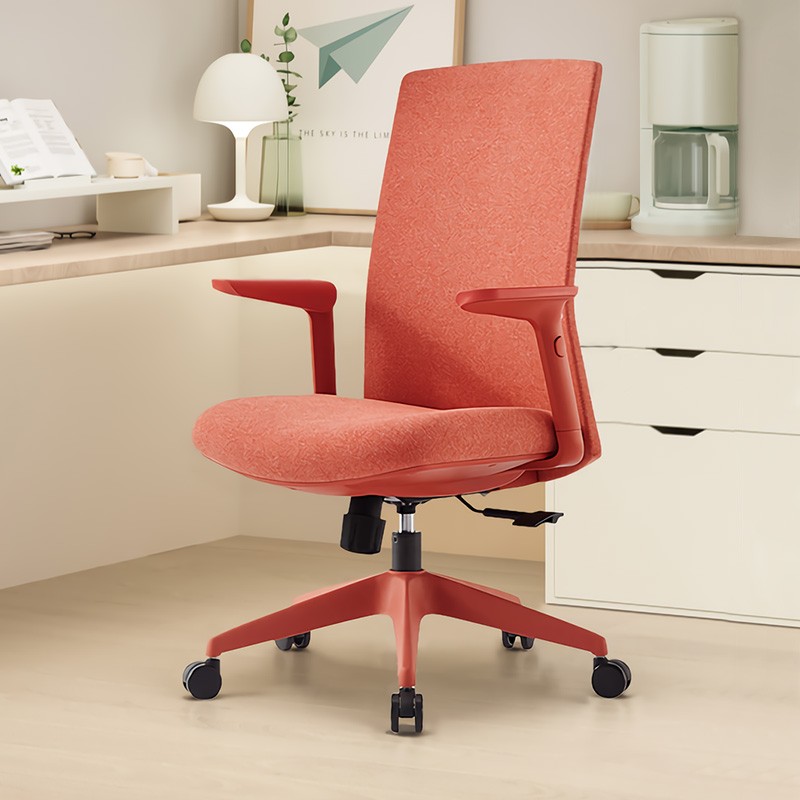
Materials:
Different materials offer various levels of comfort and durability:
- Mesh: Breathable and suitable for long hours of sitting.
- Leather: Luxurious and easy to clean, but can be less breathable.
- Fabric: Often more affordable and comfortable but may require more maintenance.
Construction:
Check the chair’s frame and base for sturdiness. High-quality construction ensures the chair’s durability and stability. A robust base and reliable casters are crucial for smooth movement and long-term use.
In-Store Testing: If possible, test the chair in-store to assess its comfort and adjustability. Sit in the chair for a few minutes to gauge how well it supports your body and whether it meets your comfort needs.
Online Reviews: Read user reviews and ratings to get an idea of how well the chair performs in real-world conditions. Reviews can provide insights into comfort, durability, and overall satisfaction.
Price Range: Desk chairs vary widely in price. Higher-end models often offer more features and better materials, but it’s essential to balance cost with the comfort and features you need. Set a budget and look for chairs that offer the best value within your price range.
Swivel and Mobility: A swivel chair and smooth-rolling casters enhance mobility and allow you to move around your workspace with ease. Ensure the chair’s casters are suitable for your flooring type (e.g., carpet or hardwood).
Optional headrests provide additional neck support and can help reduce tension. Look for adjustable headrests if you need extra support for your head and neck.
Reclining: A reclining feature allows you to tilt the chair back, providing comfort during breaks. Choose a chair with a reclining function if you prefer to change your position throughout the day.
Choosing the most comfortable desk chair involves considering various factors, including adjustability, ergonomic support, and material quality. By evaluating your needs and testing different options, you can find a chair that enhances your comfort and supports your productivity.
1. Assess Your Needs
Usage Duration: Consider how many hours a day you’ll spend sitting. If you’re in your chair for extended periods, comfort and support become even more critical. For shorter periods, basic comfort features may suffice.
Work Type: Identify the nature of your work. If you engage in tasks that require frequent adjustments or long periods of sitting, look for a chair with comprehensive ergonomic features. Specific tasks might demand additional features like adjustable armrests or enhanced lumbar support.
2. Key Features of a Comfortable Desk Chair
Adjustability:
A comfortable chair should be highly adjustable. Ensure it offers:
- Seat Height: Allows you to set your feet flat on the ground.
- Backrest Angle: Lets you recline comfortably.
- Armrests: Adjust to reduce strain on your shoulders and wrists.
Lumbar Support: Good lumbar support helps maintain proper posture and reduces back strain. Look for a chair with adjustable lumbar support to fit the curve of your lower back.
Seat Cushioning: The seat cushion should be soft enough to be comfortable but firm enough to provide support. Options include foam padding, gel inserts, and memory foam, each offering different levels of comfort and support.
3. Ergonomics
Seat Dimensions: Ensure the seat is deep and wide enough for your body. The seat depth should allow you to sit with your back against the backrest while leaving about 2-4 inches between the edge of the seat and the back of your knees.
Backrest Adjustments: An adjustable backrest helps support your spine’s natural curve. Look for chairs that allow you to adjust the height and angle of the backrest to fit your body and working posture.
Armrests: Adjustable and padded armrests can help reduce strain on your shoulders and neck. Ensure they are positioned so that your arms are relaxed and your elbows are at a 90-degree angle when typing or using a mouse.
4. Material and Build Quality
Materials:
Different materials offer various levels of comfort and durability:
- Mesh: Breathable and suitable for long hours of sitting.
- Leather: Luxurious and easy to clean, but can be less breathable.
- Fabric: Often more affordable and comfortable but may require more maintenance.
Construction:
Check the chair’s frame and base for sturdiness. High-quality construction ensures the chair’s durability and stability. A robust base and reliable casters are crucial for smooth movement and long-term use.
5. Testing and Budget
In-Store Testing: If possible, test the chair in-store to assess its comfort and adjustability. Sit in the chair for a few minutes to gauge how well it supports your body and whether it meets your comfort needs.
Online Reviews: Read user reviews and ratings to get an idea of how well the chair performs in real-world conditions. Reviews can provide insights into comfort, durability, and overall satisfaction.
Price Range: Desk chairs vary widely in price. Higher-end models often offer more features and better materials, but it’s essential to balance cost with the comfort and features you need. Set a budget and look for chairs that offer the best value within your price range.
6. Additional Features
Swivel and Mobility: A swivel chair and smooth-rolling casters enhance mobility and allow you to move around your workspace with ease. Ensure the chair’s casters are suitable for your flooring type (e.g., carpet or hardwood).
Optional headrests provide additional neck support and can help reduce tension. Look for adjustable headrests if you need extra support for your head and neck.
Reclining: A reclining feature allows you to tilt the chair back, providing comfort during breaks. Choose a chair with a reclining function if you prefer to change your position throughout the day.
Conclusion
Choosing the most comfortable desk chair involves considering various factors, including adjustability, ergonomic support, and material quality. By evaluating your needs and testing different options, you can find a chair that enhances your comfort and supports your productivity.
Leave a Reply
Your email address will not be published.Required fields are marked. *